
From £300
Steam & Desiccant Dust Bed Bug Treatment
Our third treatment method is a two-stage visit, and our technicians are trained and equipped for both halves of it. First we go through the room with professional steam equipment — wall and floor junctions, skirting and carpet edges, bed frames, headboards, mattress seams and upholstered furniture — because steam kills bed bugs and their eggs on contact. Then we apply an ultra-fine desiccant dust into the voids and runways steam cannot reach. The dust kills physically rather than chemically, so there is no known resistance to it, and it keeps working in wall voids, bed frames and floor cavities for months after we leave. We offer this where heat treatment or a conventional spray cannot be carried out.
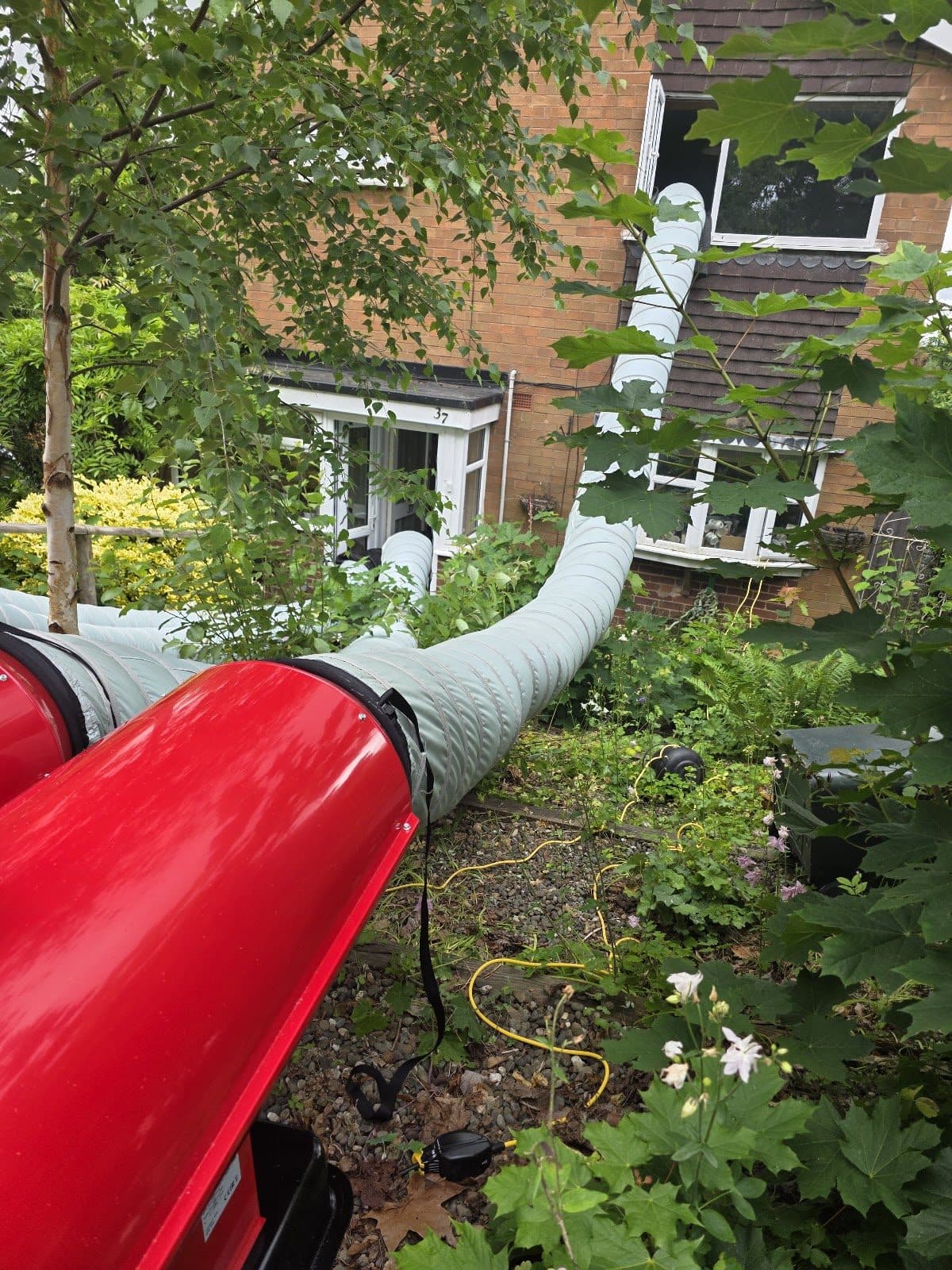
Professional Steam Equipment
When Heat Isn’t Possible
No Known Resistance
Long-Lasting Residual
From £300 — Steam & Desiccant Dust Treatment
From £300 for the first room, with a reduced rate for each additional room treated on the same visit. Includes inspection, the full steam treatment, targeted dust application and written aftercare guidance. No call-out fee. Larger properties, HMOs and commercial premises are quoted on inspection.
This treatment is not covered by our 60-day written guarantee, which applies to heat treatment only. We would rather tell you that up front.The Two-Stage Treatment
We Steam First , Then Apply the Dust
This is not a dust-only treatment. Every visit is carried out in two stages, in that order, because each method covers the other’s weakness: steam kills what is in the room on the day, and the dust deals with what is sheltering deeper in the structure or arrives afterwards.
Stage One — Professional Steam
We use commercial steam equipment, not a domestic steam cleaner. Steam kills bed bugs and their eggs on contact, which is the one thing a dust cannot do quickly. Our technicians work the nozzle slowly across each surface so the heat is held on the material long enough to be lethal, rather than skimmed over the top of it, and we work methodically outwards from the bed rather than spot-treating where bites were noticed.
Stage Two — Desiccant Dust
Once the accessible population and eggs have been dealt with, we place an ultra-fine mineral dust into the voids, cavities and runways that steam physically cannot reach. That is what carries the treatment forward for months — catching bed bugs that were sheltering deeper in the structure, and any that walk in later from a neighbouring room or flat.
Why the Order Matters
Steam is contact-only and leaves nothing behind the moment it cools. Dust is long-lasting but slow, and only works when an insect walks through it. Steaming first knocks the live population and the eggs down immediately; dusting second means the residual layer goes down onto surfaces that have already been cleared, instead of on top of a live infestation.
Low-Moisture and Controlled
Professional steam equipment delivers a much drier steam than a domestic machine, so fabrics, carpet and timber are not soaked. Treated edges are left slightly warm and lightly damp rather than wet, and dry off normally within a few hours with the room ventilated.
Where We Steam
Steam is directed at the places bed bugs actually shelter and travel, working outwards from the bed. On a typical bedroom that means:
- Wall and floor junctions — the gap where the skirting meets the floor, and the edges behind it. It is one of the most reliable harbourage points in any infested room and one of the first places we treat.
- Skirting boards and architrave, including the joint where they meet the wall and any gaps, splits or lifted sections along their length.
- Carpet edges and gripper rods around the perimeter of the room, and the underside of the carpet edge where it can be safely lifted.
- Bed frame joints, slats, bolt housings and screw holes — dismantled where the frame allows it, because the inside of a joint is where bed bugs sit rather than the outside.
- Headboards, including the back face, the buttoning and seams on an upholstered board, and the fixings that hold it to the wall or frame.
- Mattress and divan base seams, piping, tufts, labels, handles and zip channels.
- Sofas, armchairs and upholstered furniture — seams, piping, under and around the cushions, and the frame and webbing underneath.
- Bedside cabinets, drawers and furniture carcasses, including runners, joints and the underside, which is checked far less often than it should be.
- Curtain hems and linings where they touch the floor or rest against the wall.
What steam does not do:
it only kills what it directly touches, and it leaves no protection behind at all. Steam cannot reach inside a wall void, behind a fixed socket plate or into a floor cavity, and the moment a surface cools it offers nothing against a bed bug that emerges an hour later. That gap is exactly what the desiccant dust is there to fill, and it is why we carry out both stages on the same visit rather than offering either one on its own.
How It Works
A Physical Way to Kill Bed Bugs
Almost every bed bug spray on the market attacks the insect’s nervous system, and bed bugs across the UK have spent decades evolving to survive exactly that. A desiccant does something they have no defence against.
It Kills Physically, Not Chemically
Bed bugs are protected by a thin waxy layer on their shell that holds moisture in. The dust is milled so fine that its particles strip and absorb that waxy layer on contact. The insect then loses water it cannot replace and dies of dehydration. Nothing is absorbed into the nervous system — it is a purely physical process.
Resistance Cannot Develop
Widespread pyrethroid resistance is the single biggest reason conventional sprays now fail on bed bugs. An insect can evolve to tolerate a nerve poison; it cannot evolve to stop needing water. That makes a desiccant reliable against populations that have already survived one or more spray treatments.
Non-Repellent — They Walk Through It
Many insecticides are detectable to bed bugs, which makes them scatter deeper into a property. This dust is not repellent. Bed bugs cross treated harbourage and runways without avoiding them, picking up a lethal dose on the way to and from a host.
It Keeps Working After We Leave
A spray breaks down within weeks. Placed correctly inside a dry, undisturbed void, a mineral dust does not evaporate or degrade — it stays lethal for months and, in a void that is never disturbed, considerably longer. That gives ongoing cover against bed bugs re-entering from a neighbouring room or flat.
Our technicians are now trained in this method.
We have added desiccant dust application to the services our team is trained and equipped to deliver, alongside heat treatment and chemical spray. That means we can now recommend the right method for your property rather than the only one we offer.
When We Use It
For the Jobs Where Heat or Spray Won’t Work
This is not a replacement for heat treatment. It is the answer to a question we are asked constantly: what happens when heat treatment cannot be carried out, and a spray is not appropriate either?
When Heat Cannot Be Used
Heat treatment remains our first recommendation because it clears a property in a single visit and kills every life stage including eggs. But it is not always possible. Where it is not, a desiccant treatment gives you a genuine professional option rather than a compromise.
When a Spray Is Not Suitable
Sprays are ruled out on plenty of jobs — on health grounds, because of pets, or simply because the population has already proven resistant to them. A physical dust sidesteps all three of those problems.
Flats, HMOs and Blocks
Where bed bugs keep arriving from a neighbouring property, killing what is in your room today does not stop what walks in next month. Dust placed in the voids and service runs between units keeps working against reintroduction long after a one-off treatment would have worn off.
As a Residual Layer After Heat
Heat has no residual effect at all — the moment it cools, the property is as vulnerable as any other. On high-risk sites we can place dust into voids immediately after a heat treatment, so the property keeps a long-term line of defence. Ask us about combining the two.
Suitability
Reasons Heat Treatment Cannot Be Carried Out
Heat treatment clears a property in a single visit and is what we recommend wherever it is possible. These are the situations where it genuinely is not.
- Fire and sprinkler systems that cannot be safely isolated for a heat cycle.
- Heat-sensitive contents — vinyl records, candles, artwork, musical instruments, certain plastics, aerosols and some electronics.
- Residents, pets or medical equipment that cannot leave the property for the working day.
- No suitable power supply on site, or access constraints that prevent us siting equipment safely.
- Very large, open or poorly sealed spaces that will not hold an even lethal temperature.
- Severe clutter or hoarding, where the property cannot be heated evenly until it is cleared.
- Listed or historic buildings with fabric that should not be subjected to a full heat cycle.
Reasons a Spray Is Not Appropriate
Our £175 chemical spray treatment suits some early-stage situations, but it is ruled out more often than people expect.
- Suspected or confirmed pyrethroid resistance — typically where sprays have already failed once.
- Asthma, chemical sensitivity, allergies or other respiratory conditions in the household.
- Infants, pregnancy, or immunocompromised or palliative residents.
- Fish tanks, reptiles, birds or beehives on the premises, which residual insecticides can harm.
- Food preparation and food storage areas where a residual insecticide is not appropriate.
- Landlord, insurer or employer policies that restrict residual insecticide use on the property.
Compare the Options
Heat vs Steam & Desiccant vs Chemical Spray
An honest side-by-side comparison of the three methods we offer, so you can see exactly what each one does and does not do.
| Heat Treatment | Steam & Desiccant | Chemical Spray | |
|---|---|---|---|
| Kills eggs | Yes — all life stages | Yes — steam kills eggs on contact, and the dust catches any that hatch later | No |
| Speed | Single visit, same day | Immediate knock-down wherever steam reaches, then activity declines over days and weeks | Days, usually repeat visits |
| Resistance a problem? | No | No | Yes — widespread in the UK |
| Residual protection | None once cooled | Months, and longer if undisturbed | Weeks |
| Property must be vacated | Yes, for the working day | Only the room being treated, while we work | Typically a few hours |
| Suitable with heat-sensitive contents | No | Yes | Yes |
| 60-day written guarantee | Yes | No | No |
| Price | Quoted on inspection | From £300 | £175 — single visit |
The short version:
if heat treatment is possible, book heat treatment — it is the only method that clears a property in one visit with a written guarantee. Desiccant dust is what we reach for when heat is off the table, when a spray would be pointless or inappropriate, or when a property needs long-term protection against bed bugs arriving from next door. Read more on our
or the
.
What Happens
Our Steam & Desiccant Process
Inspection and Honest Advice
Call 0121 751 3341 or WhatsApp us. We inspect and identify the harbourage. If heat treatment is the better option for your property, we will tell you so — we are not going to sell you the wrong method.
Fixed Written Quote
Steam and desiccant dust treatment starts from £300 for the first room, with a reduced rate for each additional room treated on the same visit. Larger properties, HMOs and commercial sites are quoted on inspection. No call-out fee.
Steam Treatment
We start with commercial steam equipment, working outwards from the bed. Wall and floor junctions, skirting and carpet edges, bed frame joints and slats, headboards and their fixings, mattress and divan seams, and upholstered furniture are all steamed with slow, deliberate passes. Frames are dismantled where they allow it. Steam kills bed bugs and eggs on contact, so this stage clears what is present on the day.
Targeted Dust Application
This is precision work, not broadcasting powder around a room. Using a professional applicator we place a barely visible film into bed frames and joints, behind headboards, along skirting and floor edges, into wall voids, behind socket and switch plates, and into the runways bed bugs use between harbourage and the bed — the places steam cannot reach.
Preparation and Aftercare Briefing
We explain exactly where the dust has been placed, which areas to leave undisturbed, how to ventilate the room after steaming, and how to launder and manage bedding while the treatment works. Written aftercare guidance is left with you.
Follow-Up Check
We stay in contact and will arrange a follow-up inspection to confirm the decline in activity. If the picture changes, or the infestation proves heavier than first assessed, we will discuss escalating to heat treatment.
Frequently Asked Questions
Steam & Desiccant Dust FAQs
Wondering whether you could just steam it yourself? We wrote an honest guide to that: does steam kill bed bugs? — what the heat actually has to reach, and why domestic steam cleaners usually spread an infestation rather than clear it.
Related: Heat Treatment · Chemical Spray £175 · Combined Treatment · Treatment Costs · 60-Day Guarantee · Areas We Cover