
Heat Treatment vs Chemical Treatment for Bed Bugs: Which Actually Works?
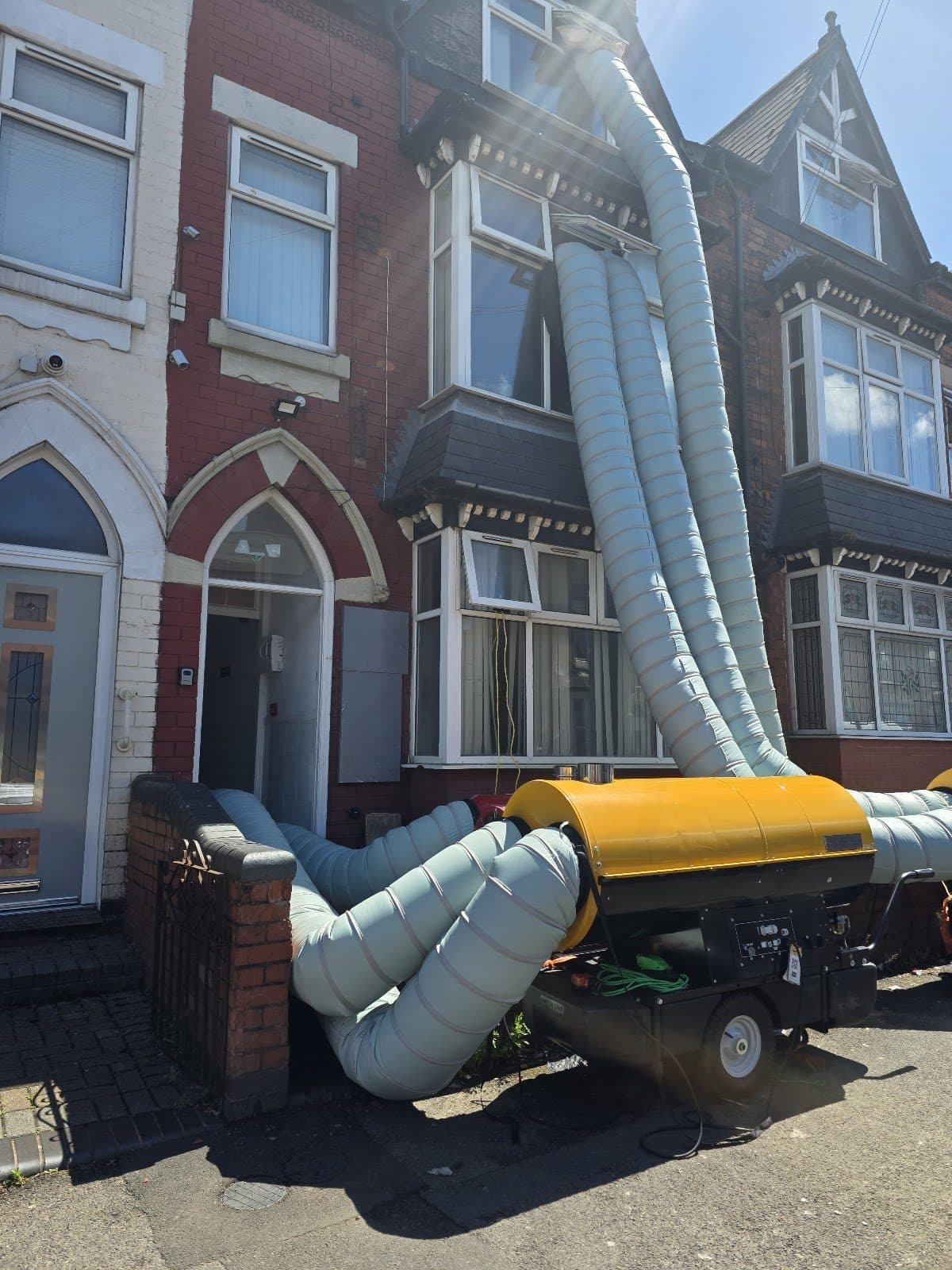
If you’ve discovered bed bugs in your home, the first question you’ll probably ask is: how do I get rid of them? The two main professional treatment options are heat treatment and chemical (insecticide) treatment. They work very differently, and the gap in effectiveness between them has grown significantly in recent years. Here’s an honest breakdown of both.
How Chemical Treatment Works
Chemical bed bug treatment involves a pest controller applying insecticide sprays, dusts, or aerosols to affected areas — typically mattress seams, bed frames, skirting boards, and any cracks or crevices where bugs might hide. Most products use pyrethroid insecticides as their active ingredient.
Chemical treatment usually requires multiple visits, spaced 2–3 weeks apart, because insecticides cannot kill eggs — only live bugs. The idea is to catch newly hatched nymphs before they reproduce. You may need to stay out of treated rooms for several hours and wash all bedding at high temperatures.
The Problem with Chemical Treatment in 2026
The major issue with chemical treatment is insecticide resistance. A significant proportion of UK bed bug populations have developed resistance to pyrethroids, the most commonly used insecticides. Bugs that survive a chemical treatment pass this resistance on to their offspring, making each generation harder to kill. Industry research suggests chemical treatments now have an effectiveness rate of around 70% in resistant populations, compared to close to 100% for heat treatment.
Even in non-resistant populations, chemicals struggle to penetrate deep harbouring sites — inside mattress padding, behind electrical sockets, within wall voids. Bugs hidden in these areas often survive treatment and re-emerge to re-establish the infestation.
How Heat Treatment Works
Professional heat treatment uses industrial heating equipment to raise the temperature of an entire room — or the whole property — to between 50°C and 60°C, and maintains that temperature for several hours. At these temperatures, bed bugs die at every life stage: adults, nymphs, and eggs.
Heat penetrates everywhere — inside mattresses, behind skirting boards, within furniture, into wall cavities. There is no place a bed bug can hide that heat cannot reach. Unlike chemicals, bed bugs cannot develop resistance to heat. A well-executed heat treatment eliminates the infestation in a single visit.
Head-to-Head Comparison
| Factor | Heat Treatment | Chemical Treatment |
|---|---|---|
| Effectiveness | Up to 100% | ~70% (lower with resistance) |
| Kills eggs? | Yes | No |
| Number of visits | One | Two to three minimum |
| Time to return home | Same day | Several hours to overnight |
| Chemical residue | None | Yes |
| Risk of resistance | None | High and growing |
| Cost | Higher upfront | Lower per visit but multiple needed |
Which Is Better Value?
Heat treatment costs more upfront than a single chemical treatment visit. However, when you factor in the number of return visits often required with chemicals, the risk of treatment failure, and the disruption of a prolonged infestation, heat treatment frequently works out cheaper overall — and far less stressful.
Most reputable pest controllers now recommend heat treatment as the gold-standard approach for bed bug eradication, particularly in properties where a chemical treatment has already failed or where there are concerns about insecticide resistance.
Get Professional Heat Treatment in the Midlands
Midlands Bed Bug Heat Treatment Limited specialises exclusively in professional heat treatment for bed bugs across Birmingham, Coventry, Leicester, Nottingham, Derby and the wider Midlands. We eliminate bed bugs completely in a single visit, with same-week appointments available.
Get in touch or call 0121 751 3341 for a free quote.
Heat vs chemical: the honest side-by-side
| Heat treatment | Chemical spray | |
|---|---|---|
| Kills eggs? | Yes — all life stages die above 56°C | No — eggshells resist insecticide |
| Visits needed | One | Often two or three, spaced weeks apart |
| Resistance risk | None — insects cannot evolve resistance to heat | High — UK bed bugs are widely pyrethroid-resistant |
| Reaches hidden bugs | Yes — heat penetrates furniture voids and wall cavities | Only surfaces the technician can physically reach |
| Chemical residue | None | Yes — surfaces left treated |
| Back in the room | Same day, once cooled | After several hours’ ventilation |
Why chemical sprays fail so often in the UK
Bed bugs in Britain have been sprayed with the same families of insecticide for decades, and the survivors bred. Studies of UK and European populations routinely find strong resistance to pyrethroids, the active ingredient in most professional and DIY sprays. Resistant bugs can walk across a treated surface and survive. That is why so many people tell us the same story: the spray seemed to work for two weeks, then the bites came back worse.
Even where the chemistry still works, spraying has a coverage problem. A technician can only treat surfaces they can reach. Bed bugs spend most of their lives hidden inside mattress seams, bed frame joints, cracked plaster, behind skirting boards and inside the fabric of upholstered furniture. Eggs are cemented into those same voids and are protected by their shells. Nothing sprayed on a visible surface reaches them, which is why chemical programmes need repeat visits timed to catch nymphs as they hatch — and why missing that window restarts the whole cycle.
Why heat works differently
Heat is a physical kill, not a chemical one. Bed bugs and their eggs die when their body temperature is held above roughly 56°C. We bring industrial heaters and ducting into the property, raise the whole treated area past that threshold, and hold it there while fans push hot air into the voids where the bugs actually live. Nothing can hide from it and nothing can be resistant to it — an insect cannot evolve its way out of being cooked. One properly executed heat treatment ends the infestation, which is why we can put a 60-day guarantee on it.
So when does spraying make sense?
We are not against chemicals — we offer a spray service ourselves. It is the right call when the problem is genuinely early: bites started within the last week or two, evidence is confined to one bed or one room, and nothing has spread to other furniture. In that situation a targeted spray with a proper follow-up visit has a fair chance, and it costs a fraction of heat treatment.
What we will not do is sell you a spray for an established infestation to win the job on price. If bugs are in more than one room, if you have seen them in furniture away from the bed, or if you have already had one spray treatment that failed, spraying again is usually money spent buying the infestation more time to spread. We will tell you that on the phone.
The combined approach
For many properties the strongest option is both: heat to eliminate the live infestation and its eggs in a single visit, followed by a residual spray barrier at entry points and around the treated area to catch anything reintroduced afterwards. That is particularly worthwhile in flats and HMOs where neighbouring units may still be infested and re-entry is a genuine risk. See our combined heat and spray programme for how that works.
Which should you book?
Use this rule of thumb. One room, very recent, nothing spread — start with the chemical spray. More than one room, bugs in furniture, or a failed previous treatment — go straight to heat treatment. Shared building or repeat re-infestation risk — combined. If you are not sure which describes you, call 0121 751 3341 and describe what you have seen; we will give you a straight answer, including telling you when you do not need us at all.